 Skip to content
25th October 2025
Thanks to contributions from T-shirt sales through registrations for the Charity run in 2025 and at the ESVS booth; contributions to the ESVS Foundation, sponsorship, and donations to our GoFundMe page, you raised just over EUR 5,000 for Mission Ethiopia! A big thank you to everyone involved and especially the EVST, who chose the hospital being supported and who have been helping to coordinate the ongoing work behind the scenes.
Part of that work was to choose an expert vascular surgeon to go to the Tikur Anbessa Hospital in Addis Ababa. It really was a difficult choice with so many experts applying but in the end, Igor Koncar was selected. Read on to find out more about his experience, over two weeks in January.
Part 1
Part 2 – A week in Addis Ababa: Learning, teaching, and profound human connections
The first week of my voluntary mission at Tikur Anbessa (Black Lion) University Hospital in Addis Ababa has passed in moments of intense clinical focus and surgical excitements, cultural exchange, delicious new tastes, always reminding me of why global collaboration in medicine matters.
After my flight was extended for more 12 hours (just above Addis Ababa we were transferred to Saudi Arabia and back) and I finally reached the hotel, there was no time to rest. I was welcomed in hospital by Dr Feron Getachew, my main host. Young vascular surgeon, still experienced, skilled, progressive, ready to take responsibilities and ambitious to improve his surroundings. He introduced me to the group of trainees and we discussed cases for the following days. Not a single case was simple since they treat simpler cases themselves.
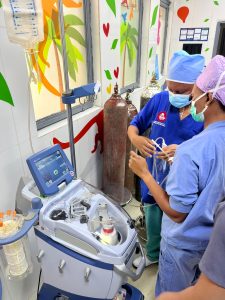
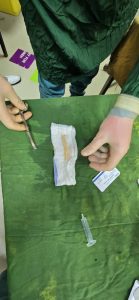
The hospital staff here are exceptionally skilled and deeply committed to patient care despite a persistent shortage of basic resources. Not only vascular grafts, essential sutures, Fogarty catheters must be rationed, even masks, caps and shoe covers are available in restricted quantities. Yet the energy and determination of the team never hesitate. They do their very best with what they have, every single day and night, with limited tools but unlimited heart.
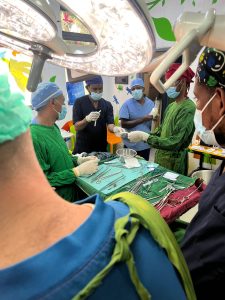
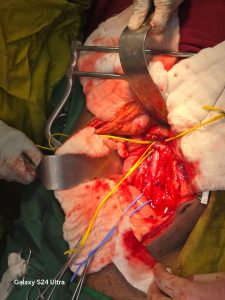
The main operating theater is under construction in its final phase, so providing one operating room all week for vascular only was a huge accomplishment of dr Getachew. Five complex open aortic cases and ruptured carotid aneurysm in one week are done. Juxtarenal aortic thrombosis, ruptured anastomosis of previous iliac graft (repaired with bovine patch), two juxtarenal and one infrarenal aneurysms. Each case was an intensive collaboration between scrub nurses, anesthetist and local team, exchanging insights and techniques in real time. It is a real challenge changing environment, comforts and operate with the team you see for the first time. Realized very soon that I am not the only one in such a mission. Met colleagues from around the globe visiting this hospital and supporting other surgeries for the benefit of patients. Collaboration with all of them was a mutual learning that made every procedure a special achievement since the average age of operated patients was 28 years. No it is not a typo.
Our day is starting with the morning session. Department is combined, cardiac (dominantly child), thoracic and vascular and besides regular patients, colleagues on duty are reporting various injuries. Every morning at least one complex injury is discussed. Vascular service was started with Professor Nebyou Seyoum Abebe, who has been educated in India, South Korea and Wisconsin. Besides dr Gatchew he trained also dr Dawit GebreGiorgis Debena and two of them are main vascular consultants that together with fellows and trainees are building up vascular service. Besides already mentioned challenges, young age and other specific conditions of patients are making vascular care challenging and highly dependent on local experience.
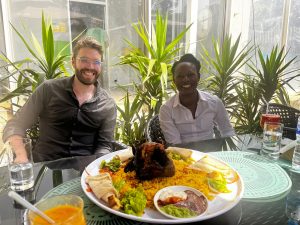
Before surgery we warm up with the tea or coffee and bred in banana foil while in the afternoon we are rewarded with local food specialties, meals typically served on a large sourdough flatbread called injera, made from teff flour. Injera is both the base of the meal used to scoop up spicy stews and sides. We are enjoying also shiro, a chickpea or bean purée simmered with spices, dulet, traditional dish made from finely chopped or minced tripe (stomach lining), liver, and often lean beef (or fish) cooked together with onions, spices, and clarified butter. It is not the end of the list of flavors we are enjoying while further discussing different protocols, ESVS recommendations, special cases, terrible complications, future perspectives, carrier and professional life challenges.
I am here accompanied with Matt Spreadbury, a vascular surgeon working in Norway, with extensive experience in voluntary and humanitarian missions in Africa. This mission was his vision and his initiative with EVST that suggested to ESVS ExCo. They proposed the collaboration, and he helped organize it, and deserves full credit for bringing the right people together at the right time. His experience, perspective, and enthusiasm have shaped not only the structure of this mission, but also its spirit — focused on education, partnership and respect for local expertise.
Unplanned and very helpful was the presence of Helen Sinabulya, a Swedish-trained vascular surgeon now working in Addis Ababa. Mixture of Scandinavian approach to clinical practice, and understanding of local healthcare systems has been invaluable. She bridges cultures, supports the local team daily, consistent and dedicated to apply standards of vascular care. Her commitment was far beyond surgical work, helped me understand local practice and adjust shortly to completely new environment and people. Of outmost importance was her effort to establish cell saver technology and help us to educate online local technicians to use cell saver technology. This made our work this week very successful.
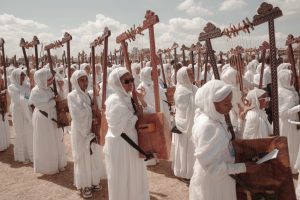
Outside the hospital, Addis Ababa itself is vibrant and alive with reconstructions and new buildings rising all around. More than four million people living on 2400m above sea level, everyone speaks at least a little bit of English. I’m still learning the place, and felt profound respect for the warmth and generosity of people I meet, felt their hospitality. Proud on their history, dedicated to their religions, respecting diversity and looking in to their future. Monday, 19th of January was religious holiday, Timkat (Epiphany) and had pleasure to participate and walk with tens of thousands of people specially dressed and happy on their national holiday.
As the first week closes, I realize this experience isn’t just about what I can contribute technically. It’s about sharing experience, building others capabilities, encouraging and putting a wind in others sails. It is also building my own personal resources and competencies, new friendships and sharing the passion for vascular surgery no matter the circumstances. Such a new level of education is what I was searching for.
Part 3 coming soon!
Great post. I was checking continuously this blog and I’m impressed! Extremely helpful information specifically the final part 🙂 I deal with such info a lot. I was seeking this certain info for a long time. Thank you and good luck.
Great work Igor!! Thank you for sharing. This is truly in line with ESVS purpose, sharing knowledge and training. Your huge educational experience as the Academy chair is now taken to the next level. Thumbs up. Pirkka